Westmoreland County

Why the Appraiser Isn’t Coming — and Why That’s Okay

If you’re expecting an appraisal and learn the appraiser won’t personally visit your home, it’s normal to have questions. In Pennsylvania, this can be a legitimate part of the appraisal process and does not mean anything is being skipped.

In some cases, the appraiser sends a property data collector to gather information, while the licensed appraiser completes the valuation analysis separately.

What a Property Data Collector Does

A property data collector gathers objective facts, such as:

  • Measuring the home

  • Taking interior and exterior photos

  • Recording room layout and visible features

They do not determine value or analyze the market.

Why You Should Still Take the Visit Seriously

Even though the appraiser isn’t there in person, the information collected is critical. Homeowners should:

  • Allow full access to the property

  • Point out updates or improvements

  • Share any information that may not be obvious from photos

Accurate data leads to a stronger appraisal.

What the Appraiser Still Does

The licensed appraiser remains fully responsible for the appraisal. They:

  • Review and verify all collected data

  • Analyze comparable sales and market conditions

  • Apply professional standards

  • Determine and sign the final value

Why This Is Done

Separating data collection from analysis allows appraisers to focus on research and valuation. It can also reduce scheduling delays and improve turnaround times. Importantly, appraisal standards and accountability do not change.

Does This Affect Value?

No. The value conclusion is still based on verified data and recent comparable sales—not on who visited the property.

Bottom Line

Seeing a data collector instead of the appraiser does not reduce the quality of the appraisal. The appraiser remains responsible for accuracy, analysis, and conclusions. What matters most is that the information collected is complete and accurate—not who holds the measuring tape.

Do Whole-House Backup Generators Add Value? What Appraisers Actually See

Power outages aren’t unusual in Western Pennsylvania, which is why many homeowners consider installing a whole-house backup generator. While generators add comfort and peace of mind, they don’t always translate into a clear increase in appraised value.

How Appraisers View Backup Generators

From an appraisal standpoint, generators are typically treated as a feature or amenity, not a dollar-for-dollar value increase. Appraisers look at:

  • How common generators are in the market area

  • Buyer expectations at that price point

  • Whether comparable sales also included generators

If generators are uncommon locally, value support may be limited.

Where Generators Matter Most

Generators are more likely to influence marketability when:

  • Outages are frequent or prolonged

  • The home is rural or higher end

  • Buyers expect resilience features

  • Comparable homes also include generators

In these cases, a generator may help a home sell more easily rather than sell for more.

Cost vs. Market Reaction

Installation costs can be significant, but appraised value reflects buyer behavior, not construction expense. Many buyers appreciate a generator but won’t pay a large premium for it.

Maintenance and Documentation

Well-maintained systems with service records contribute more positively than older or poorly done installations.

Conclusion

Whole-house generators can improve comfort and market appeal, but they don’t guarantee a higher appraised value. In Western Pennsylvania, they’re best viewed as a quality-of-life upgrade and potential marketability advantage—not a guaranteed return on investment.

Appraisal Modernization: What Agents Need to Know (and How to Stay Ahead)

The appraisal process is undergoing one of its biggest changes in decades. Fannie Mae and Freddie Mac’s Appraisal Modernization will change how appraisals are completed, reviewed, and supported—directly affecting listing prep, inspection timelines, and negotiations.

What’s Changing

Traditional forms are being replaced with a dynamic, data-driven reporting system. Appraisers will submit structured data that adapts to the property type, requiring:

  • More detailed data entry

  • Expanded photo requirements

  • Separate interior/exterior condition ratings

  • Clearer documentation of updates and converted spaces

What Agents Will Notice First

At inspections, expect:

  • More photos and measurements

  • More questions about updates and materials

  • Longer appointments during the transition

Why This Matters for Listings

Vague claims like “recently updated” will prompt follow-ups. Agents can help by providing dates, materials, and receipts when available, and clarifying above- vs. below-grade areas and conversions.

Expect More Follow-Up

Increased reporting means more clarification requests. These aren’t red flags, they’re requirements.

Timelines During the Transition

With overlapping formats through 2026, expect variability in turnaround times and more revisions. Build buffer time into appraisal contingencies.

Pricing and Appraisal Risk

Greater detail reduces tolerance for overpricing and heightens reliance on well-matched comps. Data-backed pricing matters more than ever.

Bottom Line for Agents

Value determination hasn’t changed—but documentation has. Agents who prepare listings, manage expectations, and communicate clearly will protect timelines and reduce surprises.

Hidden Egg-spenses: Pre-Listing Maintenance Tips

Spring highlights exterior condition and drainage issues that may not have been visible in winter. Addressing them early can improve first impressions, reduce appraisal flags, and support buyer confidence.

Exterior First: What Winter Leaves Behind

Start outside. Appraisers and buyers form opinions before entering the home.

Focus on:
• Peeling paint or damaged siding
• Gutters and downspouts draining properly
• Secure railings, steps, and porch boards
• Clean walkways and visible house numbers

Landscaping: Simple, Not Elaborate

Basic upkeep is enough:
• Trim overgrowth
• Remove winter debris
• Clean edges along walkways

Neat landscaping helps the home compare more favorably to similar properties.

Moisture and Drainage Checks

Spring moisture issues carry weight:
• Look for basement dampness or musty odors
• Address visible water stains if resolved
• Confirm sump pumps work
• Extend downspouts away from the foundation

Interior Touch-Ups and Systems

Brighter light reveals flaws:
• Repair peeling paint and drywall cracks
• Replace burned-out bulbs
• Tighten loose doors and hardware

After winter use:
• Replace HVAC filters
• Test heating and cooling
• Check for plumbing leaks


What Not to Stress Over

Skip major renovations for appraisal, décor trends, and eliminating normal signs of daily living.

Spring prep is about addressing winter wear, moisture concerns, and basic maintenance. Small, visible fixes help protect value, strengthen buyer confidence, and support a smoother appraisal—often at far less cost than last-minute repairs later.

Happy Easter from our office to your home!

Is There a Pot of Gold in Green Homes? What Appraisals Really Show

In Western Pennsylvania, green and energy-efficient features are often discussed in terms of comfort and savings. From an appraisal standpoint, their impact on value depends on local buyer response, not national trends.

What “Green” Means in Local Appraisals

Appraisers focus on measurable improvements that address common regional issues, including:
• Older construction and insulation
• Higher heating costs
• Basement moisture concerns
• Aging mechanical systems

Features that improve efficiency, durability, and livability tend to carry the most weight.

Energy Efficiency Buyers Value Most

Western Pennsylvania buyers are typically practical and cost-conscious. Features most likely to support value include:
• High-efficiency furnaces or boilers
• Improved attic and wall insulation
• Energy-efficient windows and doors
• Modern heat pumps or hybrid systems

Solar panels may or may not add value unless comparable sales show buyer premiums.

Green Certifications: Helpful, Not Automatic

Green certifications can provide helpful documentation but are less common locally. Without comparable certified sales or clear buyer familiarity, certifications alone do not guarantee higher appraised value.

Indoor Air Quality and Materials

In older housing stock, features such as low-VOC finishes, updated flooring, and improved ventilation can support buyer appeal and overall condition, even if they are not separately adjusted.

Water and Moisture Control Matter Here

Moisture management is especially important in this region. Features such as drainage improvements, sump pumps, waterproofing, and water-efficient fixtures often support value by reducing risk.

Documentation Makes the Difference

Many green upgrades are not obvious during an inspection. Providing a clear list of upgrades, energy audits, utility comparisons, and system warranties helps ensure features are properly considered.

Bottom Line for Western Pennsylvania Homeowners

Green features can support appraisal value when they align with local buyer expectations and are well documented. In this market, practical upgrades that improve efficiency, manage moisture, and reduce operating costs are most likely to matter.

Happy St. Patrick’s Day!

Murrysville 2022 Quarter 1

It was bound to happen. The signs are pointing to a cooling off from the height of increases we experienced in 2021. While there is still a short supply, this supply is starting to increase. As of this writing on May 23, 2022 there were 84 sales in Murrysville since the first of the year and currently there are 24 active listings, 43 properties with contingent contracts and 17 properties under contract.

2022 Quarter 1 Sales

According to the data, the first quarter of sales in 2022 for Murrysville has shown a decrease in the predominant sale prices of 2.5% per month based on simple regression. This is different from the first quarter of 2021 which was experiencing an increase of 5.6% per month.

2021 Quarter 1 Sales

I don’t have the ability to forecast what will happen in the future and we are entering the cyclical time of year when sales typically are at their strongest. However, the start of this year is possibly showing that prices are starting to correct from the highs and increases posted by 2021 and the balance is starting to tip in favor of more of a balance.

2019: 1st Third Analysis

data analysis as a service.png

As we enter 2019, with a slowing national housing market, trade wars, erratic stock market, tensions in the south pacific and in the gulf, and yield curve inversions, it's hard to see past the forest of new information. We want to provide you with basic countywide market trends and analysis to help you be better informed.

Why a third and not a quarter? Many of the markets that we cover in this report have limited data, which makes analysis difficult, yet we wanted to be able to provide some level of seasonal analysis. Quarter’s would be ideal, however, by extending the data to four months instead of three we gain 33% more data, and therefore more able to make reliable statements. It's odd, we know, but hopefully you find it helpful.

A note to begin: None of the above are singular market areas. In the two leftmost graphs are whole counties. They are placed together only because they have somewhat similar price ranges. Each of these areas has dozens of markets within them, and to represent the county trend as the market trend would be foolish. On every report that we produce we analyze the micro market of the subject and the surrounding competing markets when needed. However, to do this for a blog like this, would be to time intensive.

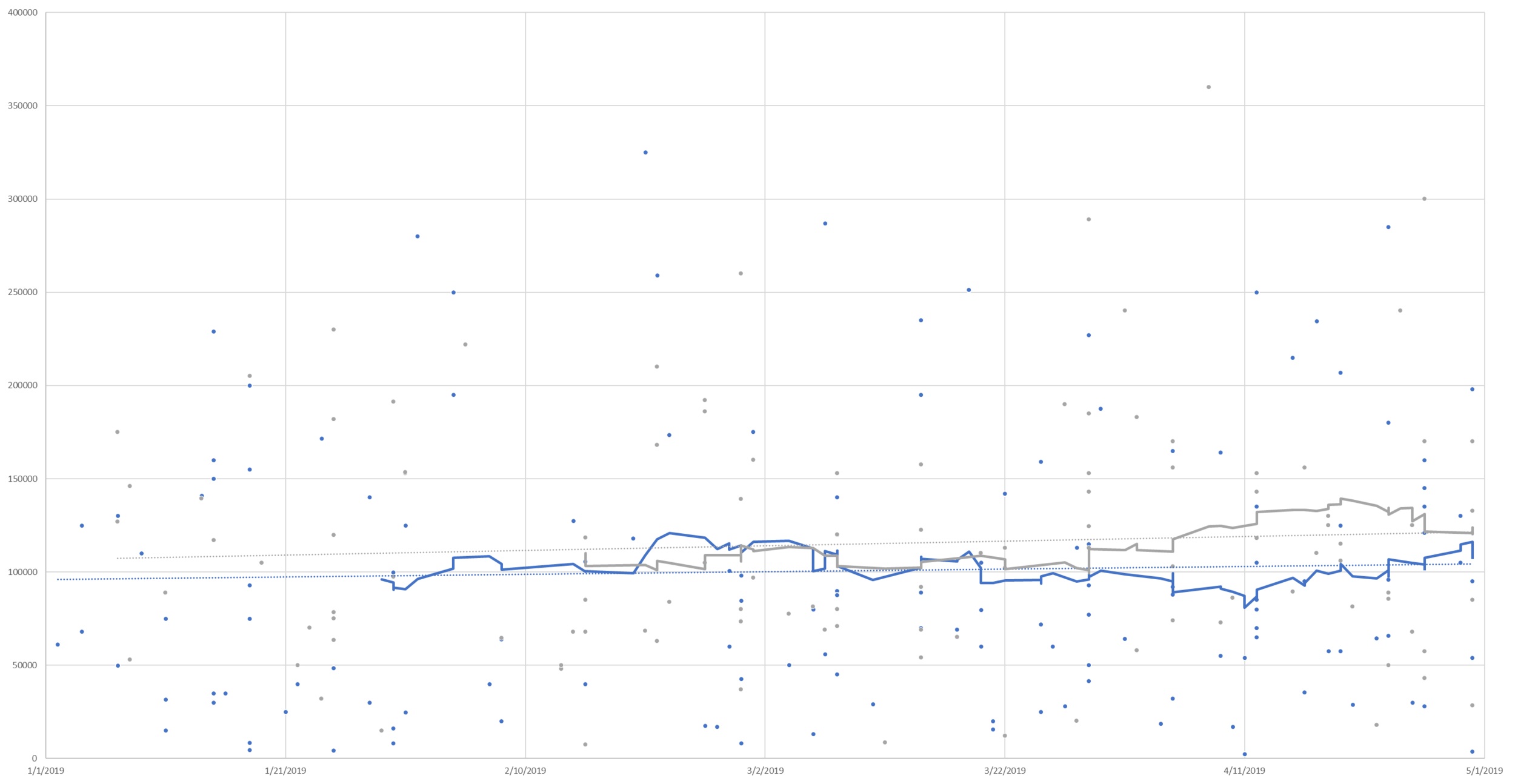
First up, let's look at Armstrong and Indiana Counties above (Armstrong: Blue / Indiana: Grey / 30 Day moving averages). These are both rural counties with some pockets of built-up areas (Indiana Borough, Kittanning, Homer City, Blairsville, Ford City, etc). Armstrong County as a whole has experienced typical seasonality, with a lower number of homes in the winter selling for slightly lower than the median prices would typically indicate, and a rebound towards the mean as we move into the late spring and the market begins to heat up. Indiana County, however, continues to struggle with low demand and a faltering median home price. While Indiana began to redound from typical seasonality, the month of April saw yet another decline. This is consistent with a now 2-year decline in home values in Indiana County. Leading this trend are the rural areas of the county, however, even White Township (the area just outside of Indiana Borough) has even recently begun to show signs of decline. Homer-Center School District is showing declines of as much as 7.5% per year, however, even the higher end homes of White Township are now showing a decline of 1.5% per year. Listing prices in Indiana County have begun to be in step with this (whereas a year ago they were increasing as prices were falling) however the degree to which listing prices are decreasing is lagging market prices similar to before. Overall, Armstrong County has a generally stable market, while Indiana County has weakening marketability (in part due to the past reassessment, more recent job closures, the declining population of IUP). While White Township had previously appeared to be resistant to this decline, it now appears to be moving with the county overall. It is possible that in the next year this trend could spill into the one area that has been resistant to the trend thus far: Indiana Borough.

In the year ending April 30, 2019, there were 451 sales in Armstrong County, while there are 227 homes currently on the market (Absorption rate of .166), indicative of a balance for the county which would likely indicate a continuing stable market. In the year ending April 30, 2019, there were 441 sales in Indiana County, while there are 384 homes currently on the market (Absorption rate of .096), indicative of an oversupply for the county which could continue to put downward pressure on home prices.

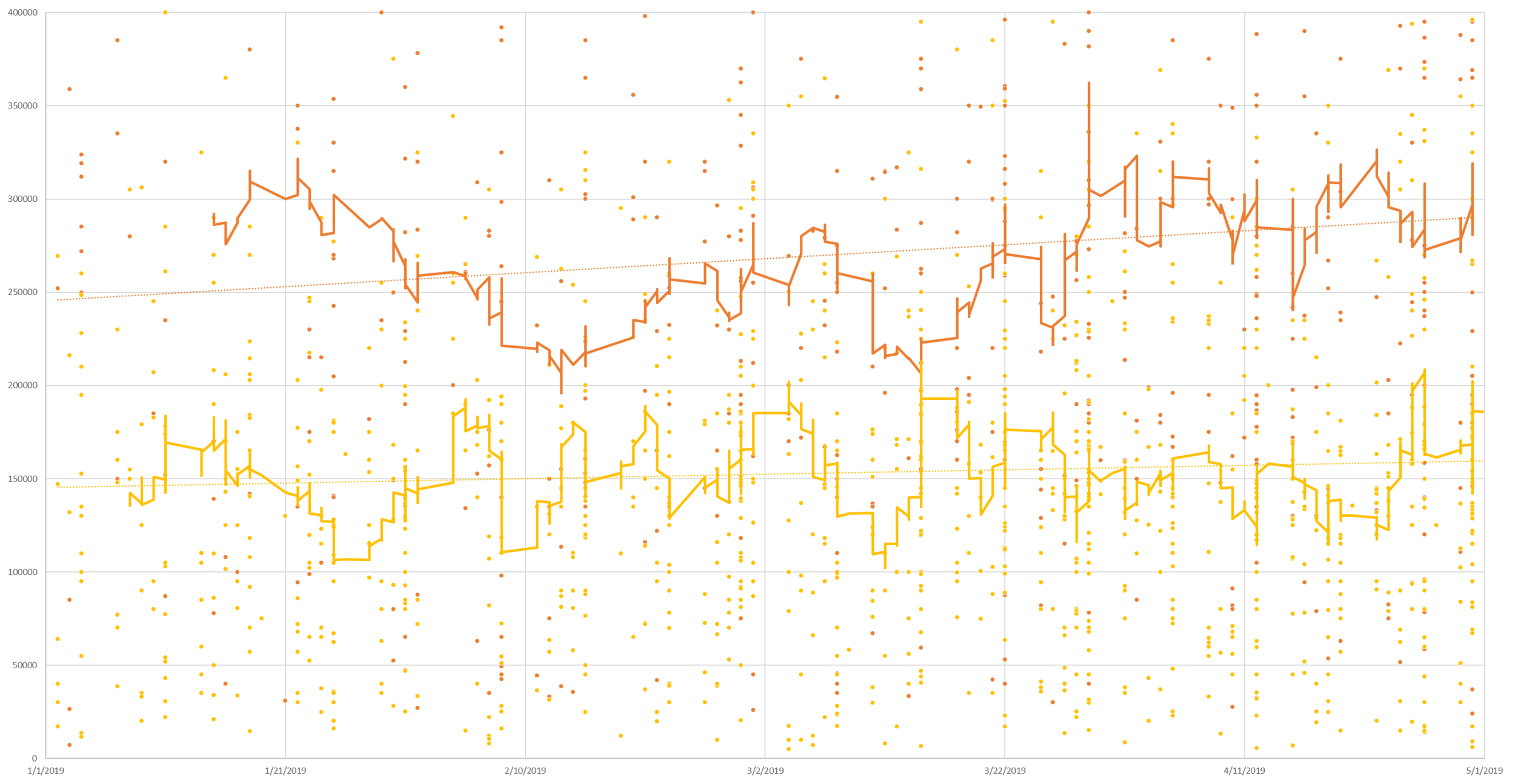
Next up, Butler and Westmoreland County above (Butler: Orange / Westmoreland: Yellow / 30 Day moving averages). These counties have mixtures of rural (Derry Twp and Karns City area for example) as well as very dense population centers nearer to the city (Cranberry Twp and Murrysville - not saying these are comparable, just having some similarity of density. Cranberry has experienced rapid growth in the last 15 years, which is in part reason for the higher sales prices) with wide ranges of appeal between them. Again, both are moving higher after seasonal softening in the winter months, however, Butler County with more sales is advancing more rapidly. Butler County has moved in a relatively steady direction from the winter lows, however, Westmoreland County appears to have had a week late March into early April. Reasons for this trend in relation to their neighbor Butler aren’t immediately apparent, but it is worth observing.

In the year ending April 30, 2019, there were 2,131 sales in Butler County, while there are 1,038 homes currently on the market (absorption rate of .171), indicative of a market in balance. In the year ending April 30, 2019, there were 3,768 sales in Westmoreland County, while there are 1,729 homes currently on the market (absorption rate of .182), indicative of a market in balance, or with a very slight undersupply.

Finally, the right two graphs are the 5 divisions of Allegheny County. These areas are highly complex, with massive differences in market areas even within these five divisions. Here we’ll offer the Absorption rate and linear regression analysis for the year ending on April 30, 2019, with current market data for listings.

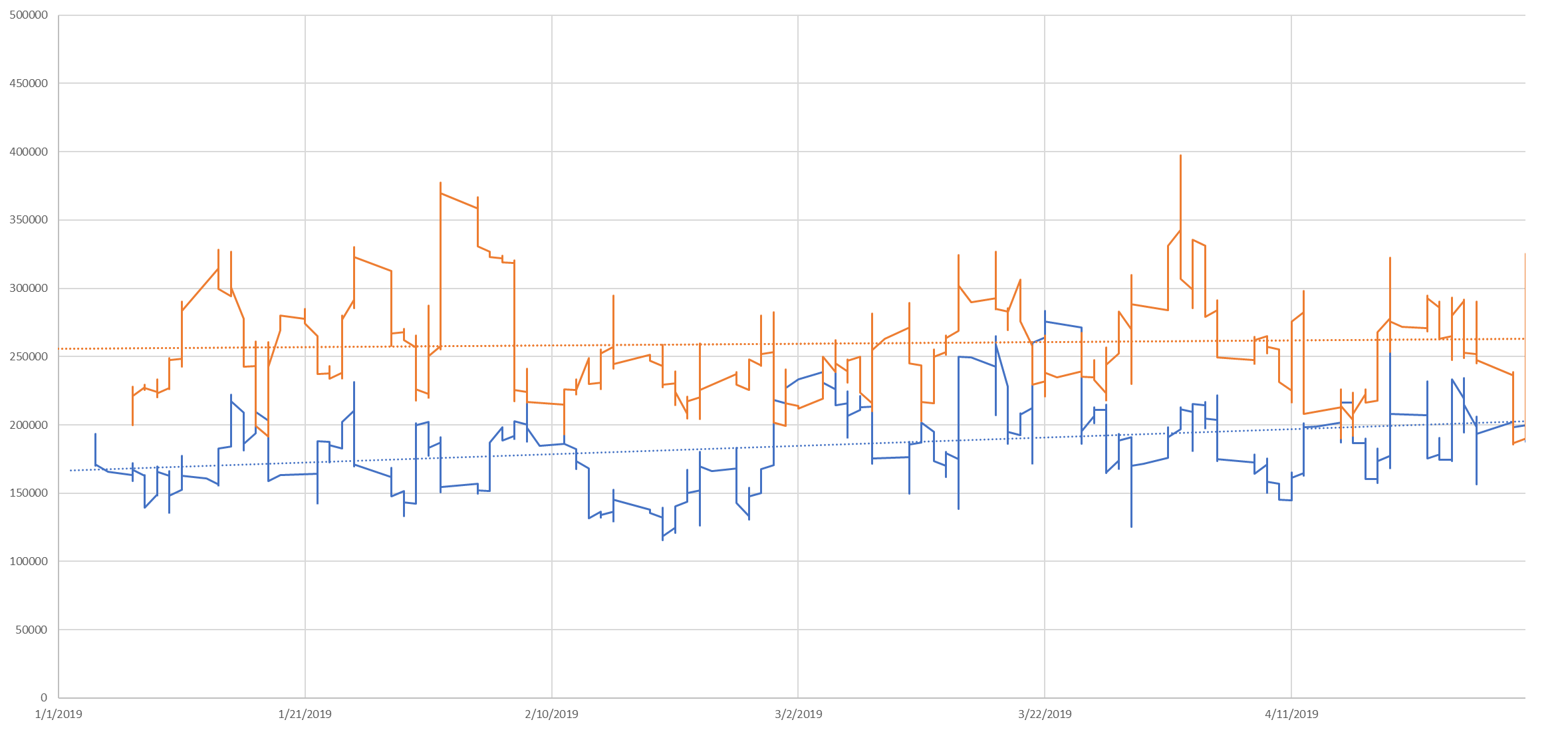
Allegheny East (Dark blue line above) had 4,289 sales in the last year with a total of 2,050 properties currently on the market (Absorption rate of .174), indicating that supply and demand are in balance. It started as the second highest median sales price area and ended the third highest. This was the third fastest growing area of the five for that time period.

Allegheny North (Orange line above) had 4,246 sales in the last year with a total of 1,687 properties currently on the market (Absorption rate of .210), indicating that there may be an undersupply. This started and ended the first four months with the highest median sale price and had the slowest appreciation of the five areas.

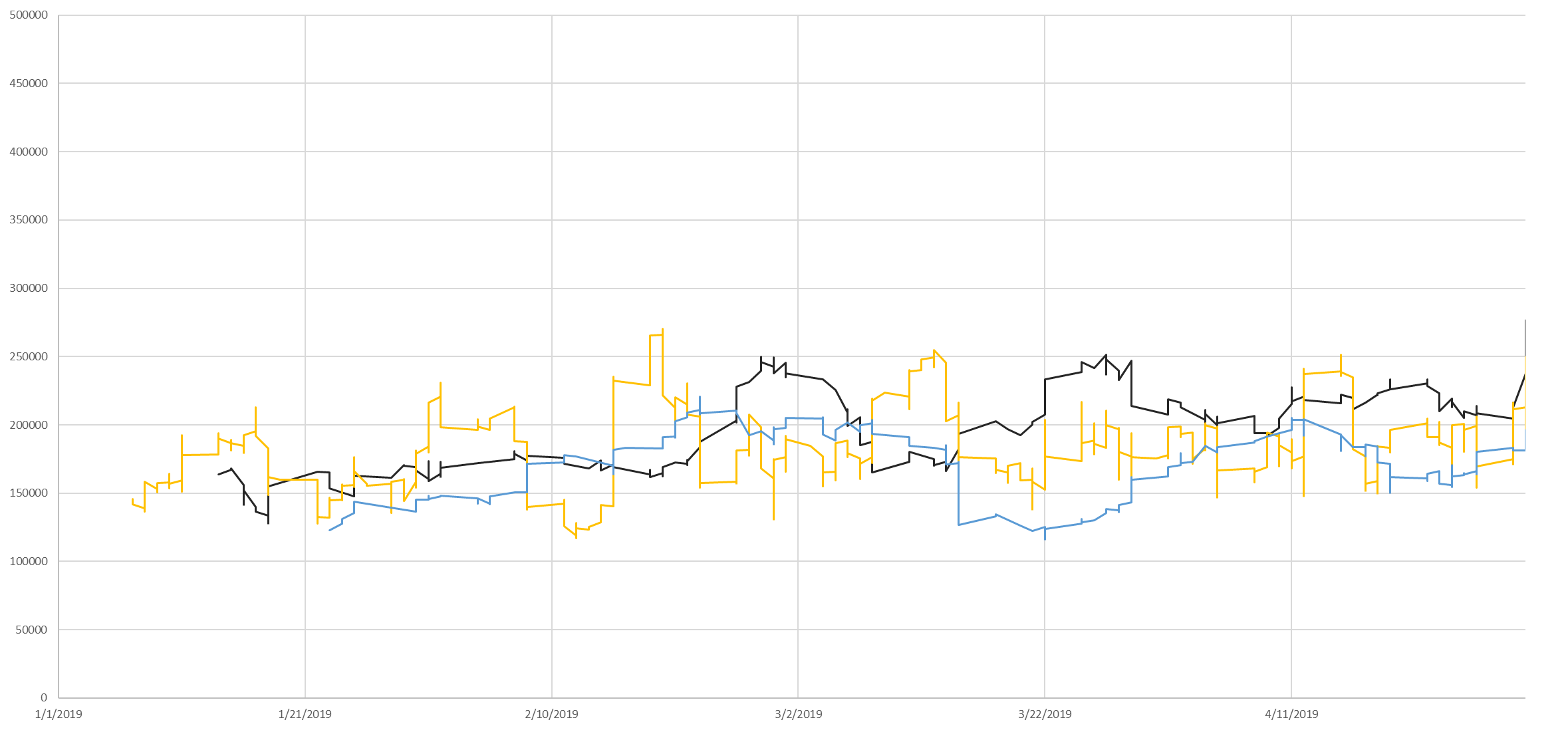
Allegheny Northwest (Black line above) had 1,259 sales in the last year with a total of 472 properties currently on the market (Absorption rate of .222), indicating that there may be an undersupply. It started as the 4th highest median sales price of the four and ended the first four months as the second highest median sales price. This was the fastest growing median sales price of the five areas for the first four months of this year.

Allegheny South (Yellow line above) had 4,264 sales in the last year with a total of 1,492 properties currently on the market (Absorption rate of .238), indicating that there may be an undersupply. It started as the third highest median sales price area and ended the fourth highest. This was the fourth fastest growing area of the five for that time period.

Allegheny West (Light blue line above) had 937 sales in the last year with a total of 330 properties currently on the market (Absorption rate of .237), indicating that there may be an undersupply. This started and ended the first four months with the lowest median sales prices. This was the second fastest appreciating market over this period.


This data is isolated to the first four months of the year, coming off of the lows of mid-winter. Attempting to extrapolate this to an annual trend would result in enormous errors. Every one of the above areas for the year ending on April 30, 2019, …

This data is isolated to the first four months of the year, coming off of the lows of mid-winter. Attempting to extrapolate this to an annual trend would result in enormous errors. Every one of the above areas for the year ending on April 30, 2019, experienced declining median sales prices and an increase in DOM over that time. The increases of the last 4 months have largely been seasonal, and in all cases have not corrected for the decline of 2018 (gray bars). Absorption rates above .20 traditionally indicate a sellers market, while absorption rates below .15 tend to indicate a buyers market. As you can see, Indiana is firmly in buyers market territory, while all but Allegheny East , in Allegheny County are in various states of buyers markets.

Why the decline? On the macro scale: Days On Market trending upward would indicate that homes on the market are higher than the buyer pool has a tolerance for generally - and that isn’t just a Pittsburgh issue, that was the story of the real estate market across the United States in 2018. The new generation (Millennials) coming into the home ownership age bracket has more debt than any generation before due to climbing education costs and falling wages when adjusted for inflation. Paired with the fact that the Baby Boomers are rapidly approaching the median life expectancy (2025), unless something unforeseen changes, this will likely mean a few years of slower than typical growth - or possible decline, as demand stays lower than typical and supply increases. Climbing interest rates in Q4 additionally put downward pressure on the real estate market across the US. Current forecasts indicate an increase of .25% over the summer off of their current 14 month low (note: an increase of .50% in the fall was paired with one of the slowest real estate markets in a decade).

On the micro scale: We expressed the reasons we believe for Indiana County above. The remaining counties have higher proximity to Pittsburgh and late 2018 saw the finalizing of the Amazon plans to build elsewhere, this may have deflated a small speculation bubble around hopes of development. We’re hopeful that a new distribution facility in Indiana County will provide some relief to the market. We also realize that there are very HOT markets in the midst of some of these declines, however, this is a bird's eye view of the region. Our area continues to move forward, navigating the transition from old industrial towns to what we are becoming. Leadership, investment, job opportunities, and creative thinking will be necessary to be successful.

Disclaimer: These graphs and analysis are based on all data available in these markets, REO, estate sales, distressed sales, and others. Micro-market trends can have huge impacts on prices, and these trends should not be extrapolated to all markets within these counties. Appraisals take as primary the immediate market area of those subject properties, and analyze differences of marketability that can change over the course of a tenth of a mile - much more those than can change from one end of a county to another.

Fun Fact: What are those hard vertical lines? Those are agents not doing closings on weekends (pushing extra data into the other 5 days, and gaps appearing weekly around weekends - good for you guys keeping your families first in the real estate race!