One Upon A Time.... A Housing Fairy Tale

Once upon a time, there was a rich nation which valued many things. There were many owners and “wannabe” owners. The owners wanted to be richer and the wannabes wanted to be like the owners. They all liked value. Some people even became “valuers of things.” They claimed to know value.

Value was price. It was obvious. Nothing to talk about here. Move along.

The owners needed money they didn’t have. So, they got help from loaners.

The loaners put up most of the money and became interested. The loaner-owners also wanted to be rich. They could get rich by “selling money!”. (Actually, they were only renting the money, but no one wanted to hear that.) And best of all, they were not renting their own money. They were renting other people’s money (OPM), and the other people didn’t really own the money either. It was just sort of out there, all guaranteed, completely safe.

What is important is that everyone liked value, but everyone needed to have someone say the value is fair. They were able to get others to declare the value as fair, but some valued fair as high as possible. “Uppraisers” were in demand.

A few of the dealer wheelers got together. The loaners became lender benders. They found liar buyers. And they found uppraisers.

All the owners, the wannabe owners, and the loaner-helpers liked uppraisers a lot because they helped richness for all. Everything worked well so long as “value” equaled price!

Until it didn’t.

~Reproduced with permission from George Dell, SRA, MAI, ASA, CRE - an excerpt from an article in the Appraisal Buzz, Thirteenth Edition, Fall 2022, Price vs Value, as found on page 27

Why You Should Not Rely on Your Zestimate

If only I received a dollar for every person I heard say “Zillow says my house is worth $XXX” I could possibly retire…. Well, that may be a slight exaggeration, but it doesn’t negate the fact that people trust what they deem to be reliable information. My advice to you is that you should not trust the stated Zestimate as a reliable source to determine what your house is worth. A Zillow estimate IS NOT an appraisal. I am not anti-Zillow since I do believe there is a place for them in todays big data world, however, it cannot be relied upon as a trusted source to determine the value of your home. Let me explain why.

First, the source of the information for your house might be unreliable. They use available public record, real estate industry data and user-submitted information to determine the features of your home. In my 22 years of real estate experience, I have found that these records are often inaccurate when determining the style, size, bedrooms, bathrooms, etc. In addition, these records never indicate to what degree a home has been maintained. Some people are very proactive at keeping their home well maintained and others…. well, not so much. I’ve seen it all in 22 years. Over the life of the home, there are items that affect the quality and condition of a home related to remodeling/updates and overall ongoing maintenance. Public records often don’t give a true insight into these finer details.

Second, the algorithm they use relies heavily on the zip code. Zip code does not typically relate to neighborhood or market area. The algorithm has improved due to location but using zip code can be misleading. In our area, we have a good example with the zip code 15601 which corresponds to the Greensburg City post office. All the zip code relates to is which USPS office handles and distributes the mail to that address. Within the 15601 zip code you have multiple municipalities such as Greensburg City, Hempfield Township, Salem Township, South Greensburg and Unity Township. That is 5 different areas that are serviced by 3 different school districts. As one would suspect, all of these areas are not similar and would include a higher density area with older structures in the City of Greensburg, residential rural areas with multiple acre parcels like some of Salem Township and newer suburban residential plans often found in Hempfield and Unity Townships. The algorithm used to determine the zestimate includes sales prices from all of these areas since they are all located in 15601 making the result less reliable even if it was only a portion of the factor in the algorithm.

Let me give you a real life example. I live in a homogeneous condominium community with townhome styled units built in the 1970’s. One of my neighbors just listed their townhome for $185,000. The zestimate for this property is around $248,000. It would not make sense for it to be listed for almost $65,000 less if it really was worth that much. The most likely reason for the high zestimate is the effect of living in a municipality with predominantly higher sale prices than the price point of our properties. The highest sale in the past 3 years has never exceeded $200,000 and only recently, have the sale prices been inching above $175,000 due to current increasing predominant sale prices overall.

Click here to read an article on the accuracy of online estimates

Instead of using a free but inaccurate source for information, trust an experienced professional real estate appraiser to indicate the correct estimate of market value for your home. Just think. If the algorithm was even remotely accurate, why did Spencer Rascoff, the owner of Zillow, sell his property in 2016 for 40 % less than the zestimate?

But I Paid For The Appraisal!

Many times when speaking with a borrower, we are asked the question “Will I receive a copy of your report?” The answer to that is mostly yes but not in the way that most are expecting. Lenders have specific guidelines as to when and how a borrower receives a copy of the appraisal. In short, for first lien mortgages, lenders are required to provide a free copy of the appraisal report promptly after the report is completed and no later than 3 days prior to the loan closing. However, since the borrower is not our client, that report will not be sent by us.

USPAP is very clear about our responsibilities as an appraiser. For those who are not aware, USPAP stands for Uniform Standards for Professional Appraisal Practice. Prior to our applying for a trainee license, we are required to take a 15 hour course on this document. Then every 2 years we need to take a 7 hour update class. This document is the basis for how appraisers are to conduct themselves professionally and by state law, we must adhere to the principles and procedures contained in it.

 USPAP defines the client as “the party or parties who engage, by employment or contract, an appraiser in a specific assignment”. When the assignment is for lending purposes, it is either the lender who directly contracts the appraiser to perform the assignment and, more often than not as of this writing, an AMC (Appraisal Management Company) contracts the appraiser. An AMC is a vendor for the lender in order to more easily comply with Appraiser Independence Requirements that were initiated around the time of the 2007 mortgage crisis. USPAP is very clear as to the obligations we as appraisers are to adhere to when it pertains to our client and conversely prohibits us from those same obligations to anyone who is not our client. Nowhere in the definition of client does it refer to who paid for the appraisal.

 I could get on my soapbox about how the lender should be covering the cost of the appraisal for the reason that the lender is using the report for the sole purpose of making a business decision. The report is for their specific intended use and for them specifically as an intended user. The borrower named on the report is often clearly indicated within the report to NOT be an intended user and therefore, I feel the lender should be paying for the report. But I digress and with that said, since the borrower is not the client, we cannot provide the report nor discuss the report with them even if they paid for it. Yes it is their property, or will potentially be their property. Yes they might have paid for it. Yes they might even disagree with the conclusions contained in the report. But in short, they are not the client and therefore, any and all information they would like to receive about that appraisal needs to come from the lender.

 In closing, if you have received a copy of your appraisal and would like to speak to the appraiser who completed it, you need to go through the lender. We typically instruct any borrower who calls our office with questions or complaints to contact their lender who in turn will then contact us to discuss any issues you might have. We agree- you might have already paid for it. But we also must adhere to our guidelines and remember who the client is.

The Best Real Estate Appraisal Office in Westmoreland County 2022

Town & Country Residential Appraisals would like to thank you from the bottom of our hearts for voting us the #1 Real Estate Appraisal Office in Westmoreland County for the year 2022!!!

For over 13 years we have prided ourselves with providing the best in service and the highest quality professional independent reports. Now we have been recognized and couldn’t be more grateful.

The Best of Westmoreland is a contest that was organized by Renda Broadcasting Corporation through WHJB 107.1 out of Greensburg. The station opened up nominations on March 17, 2022 and these nominations ended about 3 weeks later. The voting was then opened up on April 13th and was kept open for a little over 2 weeks. I had never heard of this station nor was I aware of the contest.

I was contacted in May by Lora Kay, the station’s morning on-air personality to let me know that I had won Gold for the category of Real Estate Appraisal office. At first, I thought it was a scam and was suspect that this was even a true contest. After I looked into it and confirmed this was a real contest, that Lora was a real person and in fact, I had won, I was speechless. It has been hard to keep this a secret. We had to sign a Non-disclosure agreement to keep it under wraps until todays announcement at noon.

Please keep us in mind when you are needing to have an appraisal completed. While we provide many reports for the common purchase and for refinance loans which are not directly ordered by the borrower, we can help you with your other valuation needs such as assessment appeal, divorce, estate planning, estate taxes determination, private purchase, pre-listing and bankruptcy. Whatever your need for an independent certified appraisal report, when you choose our office to assist you, you can be confident that you are choosing the #1 Real Estate Appraisal Office in all of Westmoreland County.


Our Team Has Expanded

We are excited to have expanded our team after about 2 years of limited growth. Christopher Ronallo is going to be assisting our staff appraisers and in the process, will be working to obtain the experience necessary to transition from his current position as a Licensed Appraiser Trainee to a Staff Appraiser. We are hopeful that this process will take about 16 - 18 months.

Chris came to us having had some experience as an appraiser trainee from a few years ago. In 2018, circumstances beyond his control led to him to needing to find another supervisor. This proved to be difficult and ultimately, he was not successful. He found employment in a different industry but the experience within the appraisal profession left him with the desire to return to appraising.

He started with Town & Country Residential Appraisals in June 2022 and has been working with us behind the scenes getting up to speed with our digital processes, working with the support staff to learn our systems and has now been assisting out on the road with our Senior Staff Appraiser for about 4 weeks. As you can see, in the office he is getting his own assistance from Ninja, the resident office cat.

Ninja assisting our newest team member, Christopher Ronallo

Chris holds a Bachelor Degree in Accounting from Washington and Jefferson college. Prior to appraising, he had over 20 years in accounting with experience in all facets of the business world including an accounting manager for a large company, CFO for a non-profit organization and Controller for a senior living community.

When not working or studying for his appraiser tests, Chris says he leads a boring life and spends most of his free time with family, reading and listening to a variety of podcasts.

We are very pleased to have another team member that will be able to help us continue to provide you with the best appraisal services in a competent and professional manner. If you see Chris, welcome him into the profession and help us wish him all the best in success as he continues on the path to being a Certified Residential Appraiser.

Let The Nurse Take Your Temperature

How many of you go to the doctors office and refuse to allow the nurse to take your temperature or blood pressure? In reality, you are ultimately there to see the doctor. To allow someone who is not the doctor to take your temperature, blood pressure, weight, list of symptoms and medications is not what you paid for, right? You pay for the doctor and you are going to insist that the doctor do everything that needs to be done including everything that the nurse typically does. Let’s face it. The nurse doesn’t have their level of expertise or education, so why would you have someone who is not the doctor do anything for you while in their office? When you think about this scenario, it does sound a little absurd. Most of us don’t even think about it let alone question it.

 Doctors are not the only example. Most professions have multiple levels of expertise that ultimately assist the highest level within the organization. Lawyers have paralegal personnel. Plumbers have apprentices. Professors have graduate students. Coaches have assistant coaches. Presidents have Vice Presidents. Real estate brokers have real estate sales persons.

Well, in our profession, APPRAISERS HAVE TRAINEES.

Real estate appraiser requirements have significantly advanced over the past few decades with increasing educational requirements and a few revisions to the experience process. However, one thing remains the same- you have to be a “trainee” under the supervision of a qualified certified appraiser for a period of time before you are able to fulfill the requirements to become independently certified. I put the word in quotes because, honestly, I don’t like the word. The word “trainee” seems very unprofessional as a term and would be best served to be replaced with the word Intern, Assistant or Apprentice. In essence, when you compare the requirements and process to other professions, that is exactly what they are. They are no less of a professional and are fulfilling the necessary requirements to be fully recognized as a qualified professional.

To find out more about the requirements for the state of Pennsylvania, click here:

PA Real Estate Appraiser Requirements

 In the past, I have trained multiple Appraiser Trainees who are successful independent Certified Appraisers today. Over the years, I have encountered a lack of confidence by clients and/or other parties to a transaction when a trainee is involved, especially when it comes to the portion of the process that is the observations of the actual real estate. It is possible that this is most attributed to the fact that this is the part of the process that is most in view of the general public. At the end of every on site appointment, I tell the person I meet at the property that this is the easiest and least time consuming part of the appraisal process. The portion of the process that no one sees, is the market data analyzing, the report writing and the overall analysis of the property in relation to value. This is the part that takes the longest amount of time, the most experience and the most amount of training.

 Most states have very defined laws as to whether or not a trainee can be at a property without their supervisor. In Pennsylvania, after a trainee has accumulated a minimum of 300 field hours and the supervisor deems them to be competent to complete the inspection independently, they do not need the supervisor on site. Even when the trainee views a property without the supervisor, this does not mean that the appraisal was completed in its entirety by the trainee. At the very least, the supervisor needs to review and attest to the final report even if they were mostly not involved. Typically, the supervisory appraiser has been involved in the comparable selection, the analysis and the final estimate of market value.

 So if you find yourself having an appraisal performed by my office and, as the supervisory appraiser, deems it legal and appropriate to only send the trainee to collect the real property data, just like the nurse in the doctors office, you can be assured the trainee is competent to collect the property data alone and the final report has been thoroughly reviewed, approved and signed by myself.

Stay tuned for next weeks post where I introduce our newest member of the team, Christopher Ronallo, PA Licensed Appraiser Trainee.

Observe or Inspect?

Inspection: careful examination or scrutiny


Observation: the action or process of observing something carefully in order to gain information


While the definitions are close, inspection seems to indicate a more detailed way of looking at something just by the words “examination” and ”scrutiny”.


There seems to be some confusion as to the role of the appraiser when performing an “inspection”. The process of going to the house to view a property is often termed inspection by many, including the appraiser. This can be confusing to the general public, and no matter what it is called, is not equivalent to that of an inspection performed by a home inspector. For this reason, I have recently changed the way I describe the process of collecting pertinent information about the property I’m appraising as an observation. When HUD updated its handbook for FHA insured loans, under the responsibilities of the appraiser they even stopped using the word inspection and replaced it with observe or observation.


An inspection performed by a licensed home inspector requires a higher level of scrutiny that is not within the scope of work for appraisal purposes. A quality home inspection can reveal critical information about the condition of a home and its systems. This makes the buyer aware of what costs, repairs and maintenance the home may require immediately, and over time. A home inspection in no way ever addresses how these conditions relate to value. In fact, the licensing laws and regulations for home inspectors do not permit them to develop opinions of property value.


As appraisers, when on site at the property, we observe the pertinent salient features of a property in order to determine size, functionality, quality and condition for the sole purpose of analyzing how these items affect the marketability and contributory value. It is clearly stated in most appraisal reports that while we make certain determinations as to the quality and condition of the house and its individual systems or components, we are not inspectors and do not warrant or guarantee these items.


Regardless of what it is called, the role of the home inspector and the appraiser is very different. A home inspector will evaluate the home to determine the condition for the purpose of informing the client about critical information pertaining to the home and its systems. An appraiser will observe the relevant characteristics of a property in order to relate it to value.

Some Lighthearted Humor- At My Own Expense

In real estate, we often have some funny circumstances happen to us. After speaking with one of my administrative assistants about a particular incident that happened today, she suggested that I should someday write these things down. Over the years, my staff have been quite entertained by a few of these stories. This gave me the bright idea to have a subset of articles written about my own calamities and the funny circumstances we find ourselves in as appraisers.

This particular morning, I was running a little ahead of schedule which is not typical for me as most who know me will verify that I am not a morning person. It takes a bit of caffeine to get my brain in gear. Upon pulling in the driveway of my first appointment, knowing I was early, I turned off the car and unrolled the window. The breeze and temperature was especially enjoyable this morning and with the price of gas, I figured I would take advantage of the sunny cool morning, not waste my gas and maybe go through some emails. After a few minutes, since no one had yet showed up to open the house, I decided to get out and grab my cleaning supplies so that I could wipe down the inch of dust that had collected on my dash board. It wasn’t much long after accomplishing this that I was able to get into the house.

After completing what I was there to do, I returned to my car only to find that my door was locked. I was a little puzzled and confused as to why it was locked. I didn’t remember locking it. Since it was a quick in and out, I had left the keys in the car which should have prevented it from locking. But then I realized the window was still down. This should be easy- I’ll just unlock it from the interior of the door. I reached in, pushed the unlock button.…. nothing. At this point, I tried the other 3 doors to find they were also locked. I could see the keys in the cup holder and figured I could just reach in and grab them hoping I would be able to unlock the doors with the key fob. However, I’ve been accused of having Tyrannosaurus Rex arms. Add that to my 5’ 1” height and it is apparent this will not work. Unless I was to wedge myself through the window up to about my waist, I was never going to reach them. That was not going to be ideal so I figured there had to be another way.

Now what is one to do when they need to get in the car and the only access is the open window? The thought went through my head to try a “Dukes of Hazard Style” climb through the door. As I stood there and contemplated the feat (I even tried to lift my leg to get it up over the bottom of the window frame), it was clear this would never work. First, the bottom of the window door frame is well above my hip and just the thought of trying to swing my leg up over the edge to straddle the door and climb in sent nightmarish images of me either falling flat on my back or somehow getting wedged stuck halfway hanging out the car and halfway inside the car.

It then occurred to me that the hatch might still work since I had previously stepped out of the car to obtain and return my cleaning supplies. I hastily said a quick prayer that it would open. Going through the window would have been my only other resort and it wasn’t going to be pretty. As it was, the hatch opened and crawling through the car over the seats wasn’t very pretty either, but I am still in one piece and made it to my next appointment on time.

Lesson learned- never leave your keys in the car.

What is Appraiser Blacklisting?

The role of the appraiser is to be an unbiased objective party within the many facets of the lending process whether it be for a purchase, home equity loan or refinance. In the case of a home purchase where the borrower is using a bank loan to assist with the purchase, there are multiple parties to the transaction who have an interest in and are financially dependent upon the consumation of the sale. The buyer and seller might have opposing Interests but they equally desire for the sale to close. The buyer obviously wants to have ownership of the home and the seller would like to, for whatever the reason, no longer own the home and either pay off their existing loan and/or walk away with some cash. The agents who are representing these two parties also would like for the sale to close because they don’t get paid until it does. Their commission is not only dependent on the sale being completed, but also on the amount of the sale. Which leads to the added layer for agents- the higher the sale, the higher their commission. Last but not least is the loan originator and the lender. Their main interest is to make loans and the originator gets a commission which does not get paid until the loan is closed. As you can imagine, each of these individuals have very specific special interests that are contingent upon the completion of the transaction. All but the buyer, also have the incentive to have the sale price as high as possible because they will ultimately end up with more money in their pocket.


That leaves one party in which there is no incentive because they get paid a flat fee regardless of price or a closing… the appraiser. Their fee CANNOT be contingent upon meeting or exceeding a specific value. The appraiser agrees to uphold the code of ethics as established by the Uniform Standards for Professional Appraisal Practice, also referred to as USPAP (You’s-pap). The Ethics Rule within USPAP states that appraisers are to be impartial, objective and independent to the transaction. In other words, the opinion of market value cannot and should not be influenced in ANY way by the parties to the transaction or the sale price. Illegal pressure and influence on the appraiser should be prevented and is the responsibility of all real estate professionals to uphold, with the appraiser being the one that should safeguard it at all costs. This illegal pressure and influence can also be levied in the form of blocking certain appraisers from completing assignments due to a prior “low value”.


Recently, there seems to be a trend amongst the parties that have a special interest in a transaction to thwart the Appraiser Independence Requirements (AIR) as set forth by the Home Valuation Code of Conduct (HVCC) and overseen by the Consumer Finance Protection Bureau (CFPB). This trend is being seen in the form of complaints that there is a “Conflict of Interest” between who is the assigned appraiser and one of the parties to the transaction. The “conflict of interest” is code for “this appraiser completed a prior report that was lower than I would have liked so I no longer want that appraiser completing future assignments for me”. Somehow they feel that they are minimizing the risk of another appraisal “coming in low” and hoping they get an appraiser that will “hit the number” for them.

The complaint comes most often from the agent, but recently I had one where once the agent complaint of a conflict of interest was not validated by the lender due to no actual conflict of interest, the seller then somehow stated that they also had a conflict of interest with the appraiser. The seller wasn’t even represented by the agent who stated the original conflict of interest. The seller conflict of interest was due to a supposed donation made by the appraiser to a non-profit organization they were a director for. After discussions with the lender stating this was not the case and it was clear that no such donations were ever made to the organization, the seller then refused to allow the appraiser entrance into their home. Let’s be clear, the complaint of conflict of interest was not substantiated or valid from either the agent or the seller, but once the seller refuses to allow entrance to their home, there isn’t much the lender can do other than reassign. This example was a clear egregious illegal effort by the agent to influence who completed the appraisal.


 While there are definite situations that could be seen as a conflict of interest, many of these instances are nothing more than one of the parties trying to influence the appraiser assigned to value the property. Some of these instances in which I have declined to proceed with an assignment due to a conflict of interest is when I have a personal familial relationship with either the buyer or seller, when one of the agents representing the buyer or seller is an employee of mine or when I have completed an assignment on the property for a different purpose that would be in conflict with the current assignment request.


The perceived “conflict of interest” being complained about recently is nothing more than a disagreement with the value of prior assignments in which it has affected either the outcome of the sale price or possibly even affected the closing of the sale. This is not a valid or substantiated conflict of interest. In the world of real estate, there is bound to be a portion of the appraisals that do not meet or exceed the agreement between the buyer and seller because it is our job as the appraiser not to rubber stamp this number but to truly analyze the market in relation to the property. To allow this to alter the appraiser assigned to complete the valuation is to interfere with appraiser independence and “blacklist” the appraiser they don’t like. Anyone who uses this tactic is not only breaking federal regulations, but agents who use these tactics are also in non-compliance with the National Association of Realtors (NAR) Code of Ethics, the Pennsylvania Association of Realtors (PAR) Code of Ethics, the code of ethics within the local Realtor board they belong to and are also subject to a formal complaint with the state real estate commission and the banking commission. This is very serious and is not be taken lightly. The role of the appraiser is extremely important and without our independent, unbiased and objective opinion, human nature would take over and the process would run amuck with underhanded dealings that benefit those who would monetarily gain from this behavior.


For more information regarding Appraiser Blacklisting, click on this link to the article prepared by Working RE through OREP insurance by Isaac Peck.

https://www.workingre.com/how-to-fight-blacklisting/

Price per Square Foot Is not an Indicator of Value

There are examples throughout the country where the value of a property is referenced by price per square foot. Human beings often want a simple concept that is easy to convey and understand. This simple unit of measure takes the sale price of the house and divides it by the square footage of the house to derive at a simple unit measure of assumed value. Even if this was a trusted metric, unfortunately, the square footage might not even be right as there is no universal standard that determines this to make it reliable. Many trusted real estate websites and even real estate professionals refer to this metric when selling or attempting to use a valuation model to determine estimated value or list price. Let me tell you why this is not a good unit of measure to value your property.


First you need to understand that in order for this to make sense, all factors for marketability must be equal across the board. Its like saying that the value of a car is equal to the price per horse power regardless of the brand, style, age and condition. That makes about as much sense as determining value as a cost per square foot. Just like there are multiple factors that make up a car besides the horsepower, there are many factors that make up the value of a property that can include the quality of construction, condition, how many bedrooms and bathrooms or even the size of the lot. When you break down a sale price or assumed value based only on the gross living area of a property, you eliminate the other factors that all contribute to the value of the property.

Let’s look at a hypothetical example which happens quite often in Westmoreland County and use a 2,000 sf 2 story home built in the early 2000’s using average quality components and workmanship. These homes have 4 bedrooms and 2 1/2 bathrooms above grade with a finished family room and full bathroom in the basement.

Example 1- Located in Murrysville and is located in an established residential plan with a lot size of approximately 1/2 acre. The home has been well maintained and has a fully remodeled kitchen and bathrooms. This home also has a 2 car integral garage.

Example 1- sold for $350,000 which calculates to $175.00 per square foot.

Example 2- Located in Washington Township which is just north of Murrysville but is serviced by a different school district. This house is located in a more residential rural area and sits on 5 acres of property. This home is exactly the same as example one except this home did not have any remodeling and it has a 3 car detached garage that was built 5 years ago. Its been well maintained but most items have not been replaced.

 Example 2- sold for $400,000 which calculates for $200.00 per square foot.

So which one is right- $175.00 or $200.00? Actually, neither. As you can see by these examples, while the houses may be the same in square footage, there are many determining factors that contribute to the value of a property. The higher price per square foot for the second example can be attributed to the lot size and newly built 3 car garage but these are factors that have nothing to do with the square footage of the house.

Our job as an appraiser is to determine those factors that contribute to the marketability of a property. These can include location, quality, condition, utility, lot size and additional amenities such as pools, outbuildings, etc. We use multiple methods to determine how these impact the determinations of both buyers and sellers and apply them accordingly. I can emphatically say that we never calculate value using the price per square foot “method” because we don’t have such a method. The only way price per square foot should be applied is when determining the cost to build a structure.

Do you know the size of your home?

Fannie Mae started requiring appraisers starting on April 1, 2022 to measure all single family homes and condominiums using the ANSI Z765-2021 standards. According to FNME, this policy was instituted in order to standardize the method used to measure, calculate and report the GLA (gross living area) and non-GLA areas within the appraisal. It should be noted that this standard only applies to those homes being appraised for loans being underwritten by FNME and only for those properties that are considered single family or condominiums. Other forms of property types and appraisals for private purposes, in house lending and those insured by FHA, USDA and VA have not yet adopted these standards.

In order to create less confusion and advertise the correct square footage, prior to listing your home, have an expert measure your home. There has never been a greater need for accurate reporting of the gross living area than today. Many other market areas in other locations around the country tend to sell properties and make offers based on the price per square foot. Unfortunately, we live in an area where most owners and agents don’t know the size of a home. This should soon be changing as measuring standards apply to all locations.

While appraisers are now required to use these standards, there are other real estate sectors in which there is no reporting standard. This includes real estate agents, county assessors, MLS systems, online public records and other sites that are often relied upon by the public for a resource of property information such as Zillow. In fact, our local MLS system doesn’t even require the GLA field to be filled by the agent. When they do opt to include a number for GLA, they can site 3 different sources for obtaining that GLA and these sources do not have to be verified for accuracy.

Since these standards have been instituted, there is going to be a period of time needed for adjustment. Why? Because when you look at your appraisal, you will find that the GLA reported might be considerably different from what you thought, from what you were told by your agent, from the assessment records or even possibly prior appraisals performed on that same property prior to the standard. Many times the assessment record is wrong and most real estate agents in our area have not been instructed on how to accurately measure a home for the purpose of calculating the GLA.

We have trained professionals here in the office that would be able to assist you so that you can accurately advertise the size of your home.  We offer two services, Basic Home Measurements and Detailed Floor Plans, that will allow you to know the accurate gross living area of your home which could help sell your home.

Once you have these tools in hand, it will give you the edge to help expedite the sale of your home and give your potential buyers an accurate measurement and/or floor plan of your home.

Experience Matters

When making a decision to contract just about anyone to perform a service, one of the most important qualifiers for most is the experience one brings to the table. You really don’t want someone building your deck who has never built one before or replacing your transmission if they have never worked on cars. It works the same with performing real estate appraisals.


I’ve gone back through my files and found that since starting my business in 2009, I have performed over 6,200 valuations for all kinds of clients: lenders, lawyers, accountants, home owners, estates, real estate agents, etc. Add to that the reports I completed during my training process and then as a certified appraiser in a different office for over 8 years.


So if you need an appraisal performed on a piece of residential real estate, what should you look for that will help you to know that the appraiser has the experience necessary to produce a credible assignment result giving you a valuation that is something that can be deemed reliable?


1. How long have they been appraising?

While it is true that newly certified appraisers do have experience performing appraisals because the profession still is constructed as an apprenticeship program, it takes a good 3 - 5 years to feel fully confident in your ability to perform appraisals on all types of properties. The more unique the property, the more experience necessary to produce a credible report.


2. How many assignments have they performed in your market area?

Time appraising is one factor. Experience in your market is a whole different ball game. I have been performing appraisals in the southwest Pennsylvania areas of Westmoreland, Armstrong, Indiana, Butler, Allegheny and Cambria Counties for years. However, I have never performed an appraisal in Greene County. My experience as an appraiser in some areas does not make me an expert in others.

3. Does the appraiser have experience appraising the type of property you need appraised?

Standard “cookie cutter” properties are those properties that are homogenous to the market area. Think about an established residential plan that has over 200 homes in which there is a steady sales activity. These are typically easy to appraise and does not take a significant amount of additional research or analysis. What about a home that was built on a slab in an area where 99% of the homes have a basement? Or a condo in a plan that is the only condominium plan in the entire county and you are lucky if one sells per year such as in Armstrong County? How about a 1 bedroom home where less than 2% of the homes in the county are 1 bedroom homes? These more unique properties take additional effort, time and expertise to be able to know how to extract what factors have the highest marketable indicators and contributory value in the market. Additionally, the report writing takes longer in order to make sure that your intended user understands the analysis and conclusions contained in your report.


When you are in need of a residential real estate appraisal, it is important to know that you can confidently rely on the conclusions. It doesn’t mean you will always agree with the value, but if you choose wisely, you can be sure to rely on the report as a good representation of that properties estimated market value. At Town & Country Residential Appraisals, we can give you that type of confidence for all types of residential properties in the counties we cover. We have the experience that matters!

Murrysville 2022 Quarter 1

It was bound to happen. The signs are pointing to a cooling off from the height of increases we experienced in 2021. While there is still a short supply, this supply is starting to increase. As of this writing on May 23, 2022 there were 84 sales in Murrysville since the first of the year and currently there are 24 active listings, 43 properties with contingent contracts and 17 properties under contract.

2022 Quarter 1 Sales

According to the data, the first quarter of sales in 2022 for Murrysville has shown a decrease in the predominant sale prices of 2.5% per month based on simple regression. This is different from the first quarter of 2021 which was experiencing an increase of 5.6% per month.

2021 Quarter 1 Sales

I don’t have the ability to forecast what will happen in the future and we are entering the cyclical time of year when sales typically are at their strongest. However, the start of this year is possibly showing that prices are starting to correct from the highs and increases posted by 2021 and the balance is starting to tip in favor of more of a balance.

Murrysville Year 2021 in Review

Last year, I relocated my business to Murrysville. It has been a pleasure to provide residential valuation services in an area that has so much to offer. As many have heard, read or experienced, the real estate market in the year 2021 was crazy. Houses would go up for sale and within a very short period of time, sometimes hours, multiple offers were received. Buyers were getting very aggressive with their offers, electing to forego all inspections, include escalation clauses and even include things such as free pizza dinners on Fridays for a year or Super Bowl tickets.

I decided to run the numbers on Murrysville as a whole and found that in the year 2021 there were a total of 267 recorded sales using a search of our local multiple listing service. These numbers do not include foreclosures or short sales. As an appraiser, we analyze what is going on in the market area. When doing this, we have to look at both the long term and short term activity in order to be able to recognize when there are changes happening in the market and how to best determine how this impacts value.

Murrysville Year 2021 Real Estate Sales Statistics

If you look at the general statistics of the area as a whole using simple regression, this shows that the year in review experienced a rising predominant sales price of about 1.3% per month.

Murrysville, 2021 Qtr 1

The moment you break down the sales prices into quarters, there are some very interesting results. The first quarter of the year had 59 sales which was the least number of transactions per quarter but was the only quarter that experienced an increase in predominant sales prices. Seasonally, the first and fourth quarters typically are the times of year with the least number of transactions, however, there were not the significant differences that we would typically find between the quarters. Quarter 2 had 78 sales, quarter 3 had 63 sales and the last quarter had 65 sales. More surprising is that the remaining 3 quarters experienced declines in the predominant sales prices.

Murrysville, 2021 Qtr 2

Murrysville, 2021 Qtr 3

Murrysville, 2021 Qtr 4

It is important to know that when determining the impact of what is going on in the market, statistics need to be analyzed specific to the area and specific to the time frame being impacted. Quarter 1 experienced a very significant increase in sales prices, quarter 2 was basically flat, quarter 3 had a reverse reaction by a notable decline with another decline in the 4th quarter but not as significant as the previous quarter.

The good news is that the declines of the last 2 quarters did not erase the overall trend of an increase from the beginning of the year. However, the last 2 quarters show that there could be a definite trend that is showing a cooling off and decline in the predominant sales prices.

I'll Tell You What I Want.... What I Really, Really Want

If you found yourself singing to the title of this blog, then you understand why I titled it the way I did. If not, then you might be a bit younger than me.

The path to becoming a certified appraiser involves a Supervisory Appraiser being a mentor that educates and oversees an individual who is an Appraiser Trainee for a period of time to ensure that they become a qualified Certified Residential Appraiser. If you need more specific information regarding the specific requirements, check with your state licensing boards for those qualifications.

As an established residential appraisal office for almost 13 years, I have taken on the responsibility to mentor the next generation of real estate appraisers several times. It is often difficult to find a mentor that is willing to take on a trainee, however, I find deep fulfillment passing along my passion and knowledge to someone who has a sincere desire to become a certified appraiser. Some of those candidates are successful appraisers today.

Recently, I have been seeking to add to my team someone who has a sincere desire to become a residential certified appraiser. Over the past two years, I have hired 2 individuals at separate times with no lasting success. Both were released from employment within a short period of time for various reasons of which I will not get into for privacy purposes. Lets just say they didn’t cut the mustard.

What is it that made those who I have let go not be qualified to continue and what is it that made those who are successful today get to where they are? What is it that I really, really want?

  1. Be proactive- There are prerequisite educational classes that need to be taken which include proctored exams before you can obtain your trainee license. Having your education and exams completed will only make you more appealing to a supervisor. The trainee license is necessary to allow you to work for a supervisor and start accruing field hours towards your certification. Knowing that you are not expecting the supervisor to front the money for your classes because they are completed will make you a more viable candidate for this position.

  2. Be teachable- Understand that there is a lot you don’t know. Even if you have some real estate experience, the discipline of appraising is very unique to the real estate industry. A trainee has to log on-the-job-training field hours with a supervisor for a very good reason- you need to learn by doing and there are so many aspects that it takes years to accumulate the knowledge you need.

  3. Think long term- This is not a sprint, its a marathon. Once you obtain your certification you will still have a lot of learning to do. Plan on it taking a good 5 years before you feel fully confident enough to face most scenarios (after 20 years I still consult more seasoned appraisers for those rare complicated cases). Also, the trainee compensation will typically be a much smaller percentage than your potential as a certified appraiser but it is temporary.

  4. Put your mentors needs above your own- When you find a quality mentor, maintain an understanding that they are, in essence, doing you a favor. As of the writing of this blog, you cannot become a certified appraiser without them. They are giving you the opportunity to have a long term fulfilling career and give you an income while doing it. It is an apprenticeship type position and while you are definitely adding value to the supervisor at some point along the way, that value needs to be apparent to them so that it is a mutually fulfilling symbiotic give and take relationship.

There are some things in life that are worth putting in extra effort in the short term for the long term benefit. Becoming an appraiser is one of those opportunities. To make yourself more appealing to the potential supervisor appraisers that you seek out for a possible mentorship, keep these principles in mind and you might find that you will have an easier time making it happen. I know that if someone came to me with their classes complete, with a teachable spirit, willing to make real concessions for the benefit of receiving not only my knowledge but a paycheck, and be willing to do whatever it takes to plug into my office as a valuable member of the team, it would be difficult for me to tell them no.

FHA/VA/USDA Common Repairs

No one likes to prolong the arduous process for obtaining a home loan any longer than it needs to be. There are a number of things at stake such as rate locks, dates for closing, costs incurred during the process, etc. As an appraiser qualified and approved to complete appraisal assignments for loans that are insured by FHA, USDA and the VA, there are a number of repairs that come up regularly that definitely prolong the process and cost the borrower additional fees.  When a loan is insured by these entities, they require an added layer within our scope of work to include being aware of any items within the property that affect what we term the 3 S’s: safety, soundness and security.

Safety: those items that are deemed to be a safety risk

Soundness: the integrity of the structural improvements

Security: those marketable factors that would be necessary to secure financing; does the property have typical features for the market area that deem it a marketable property

When an appraiser is at the property for these types of loans, these are the components that become part of the observation process. Finding repairs will prolong the process by making the borrower/owner complete the repairs as a condition of the loan funding and requiring the appraiser to schedule an additional appointment to determine if all repairs were complete, which costs the borrower an additional fee.

For the purpose of this brief article, I will only note those items that affect the safety and soundness of the property. Here are some of the common items that I encounter:

-          Electrical safety issues that include: missing electrical outlet/switch covers; exposed wires that are not capped and enclosed in a secured junction box; covers not installed on electrical panels; main electrical panels still serviced by Federal Pacific Stab-lok breakers; frayed exterior insulation on the main incoming wire; missing weather cap on the upper portion of the main incoming wire; missing GFCI outlets on circuits near water sources such as the laundry room, bathroom or kitchen; missing weather covers on exterior outlets

-          Settlement issues that are noted by significant gaps in the mortar missing between the foundation blocks or stone; cracks that are seen going through the block and not through the mortar; shifted blocks; bowing walls in the basement

-          Water issues that are noted as standing water in the basement; discoloration that appears to be possible mold; leaking pipes; missing gutters; ponding water on the exterior near the foundation; missing gutters

-          Houses that are built prior to 1978 that have cracked, peeling, bubbling or flaked paint anywhere on the interior or exterior and on any of the property improvements (including fences, sheds, garages, barns, etc) as there is the risk of possible lead based paint issues

-          Any house (regardless of the year constructed) that has wood exterior surfaces with missing, cracked, peeling, bubbling or flaked paint as this surface needs to be protected from deterioration by being exposed to the elements

-          Missing handrails/railings on stairways and porches that present a safety hazard; while there are no specific height limitations or requirements, typically any stairway with more than 3 risers should have a handrail and those openings with more than a 30” height should have railings that are at least 36” high; while these are general guidelines, it is best to check with the local codes to ensure that any local requirements are being met


-          Doors that open over the top of stairways need to be reversed so that they open opposite the direction of the stairway

-          Doors between the garage and any living area of the home need to be a fire rated door

This list is not all encompassing but is a compilation of the most common problems found that need to be addressed as a part of the loan process. Having this information and addressing the issues prior to the appraiser appointment will only serve to save the homeowner time and money for an additional inspection by the appraiser to determine that all the repairs were made in a professional and workmanlike manner.

What slows down the appraisal process?

amc-slows-appraisal-process.jpg

AMC’s - “Appraisal Management Company”

These organizations have come into existence in an attempt to fulfill government regulations to ensure that banks could not commit mortgage fraud like the practices seen prior to 2008. In an ideal world these would be middle men who ensure that banks can’t pressure appraisers with a predetermined value and would ensure that banks have a steady rotation of high quality appraisers. However, many times the real effect has become that AMC’s

  1. Apply pressure on behalf of the bank in ways that an appraiser can not file a suit against the bank with the FDIC and other regultory agencies.

  2. Farm out appraisals for weeks (and months in some cases we’ve seen) to find the cheapest appraiser, regardless of competency, location, or experience, so that they can’t keep the difference.

  3. Apply ridiculous stipulations to appraisers to justify that they are worth their charges. For more read here: http://appraisersblogs.com/amcs-add-weeks-2-appraisal-process

    Perhaps one of the worst: “Is the property a working farm?” Recently we got the revision request of a 5,445 square foot lot. The AMC slowed the process down by 24 hours because they needed us to comment if the lot, in the middle of a town, with dimensions of 105’ x 140’ x 71’ x 152’, was an income producing farm.

Undisclosed Information / Miscommunication

There are a lot of people in the mortgage process, and a lot of information to change hands. Thankfully in the modern world, documents can be sent immediately. However, if the appraisal is 99% done when a vital piece of information is delivered… the appraiser may need to start over from scratch. Of course other members of the process may pass this off as “The appraisal is taking a long time,” to save face instead of, “We forgot to tell the appraiser there are only 5 acres with the property being sold instead of the 105 acres in the public record…” If you are a part of a transaction that needs an appraiser, disclose everything you know. It will save you time and headaches later.

Repairs

One thing that could speed up your closing by a week is having all necessary repairs (depending on the financing being obtained) completed BEFORE the appraiser arrives the first time. If there are any needed repairs (for FHA/USDA/VA - chipping and peeling paint for example), if these are not completed at the time of the initial inspection then the appraiser will have to return to the property after the report is completed to ensure that the repairs meet the financing standards.

Save yourself a week of time and a re-inspection fee, and find out what needs to be done prior to the appraiser arriving.

Banks

Banks have a lot of people and a lot of assets and sometimes your $50,000 loan gets lost in the multi-million dollar cracks.

  1. Wrong product orders. Many times the lender knows nothing about the property being appraised other than what they are told. This can lead to Manufactured Homes being ordered as single family homes, multi family dwellings being ordered and SFR, or commercial dwellings being ordered as residential… We’ve had all three, this month.

  2. Slow turn around. Ultimately the underwriter of the bank makes the calls on a loan based on the inspection of the appraiser. As such, the appraiser often must contact the lender to obtain guidance on how to proceed. Again, with lots of loans being juggled, we’ve waited in excess of 2 weeks for answers to simple questions (and sadly sometimes, the answer doesn’t address the questions asked).

Heavy Market Volume Seasons

Some seasons (Spring and Summer) see higher volumes of appraisals needed. Sadly, there aren’t migrant appraisers who can move into town for only this time of year. That means that turn times will lengthen. The alternative is to trust less qualified individuals to value your single largest investment. Fannie Mae is currently trying to push through “No Appraisal Loans” or “Property Inspection Waivers” or “A really fast way to end up underwater on your home loan…” Don’t get duped, get a professional opinion.

Complexity

Complex properties take time. If it were as simple as putting numbers in a formula, then Zillow would trust their own algorithms when they buy properties… but they don’t. The process of “problem identification,” appraiser speak for “What are all of the things that I need to consider in the valuation of this property,” can take hours alone, then there is data gathering, data confirmation, data analysis, and report writing. As complexity increases, so does time.

Fast-Good-or-Cheap.jpeg

"Editing" and Proof Reading

6c099f189d4e475e582d98b6c68b5b149ee39025.jpg

Today we go over some of the most common errors in listings that we think might have a negative impact on the length of time on market, and final offering price. In real estate “Fluffing” has become normal, but with the ability to “digitally stage” homes in the MLS, it will become more and more difficult for buyers to know what options they really have in front of them without physically visiting the property. The difference between the “digitally staged house” and “reality” my lead to more than a few frustrated buyers as they feel their time is wasted.

Location, Location, Location - Double check where the MLS places your property.

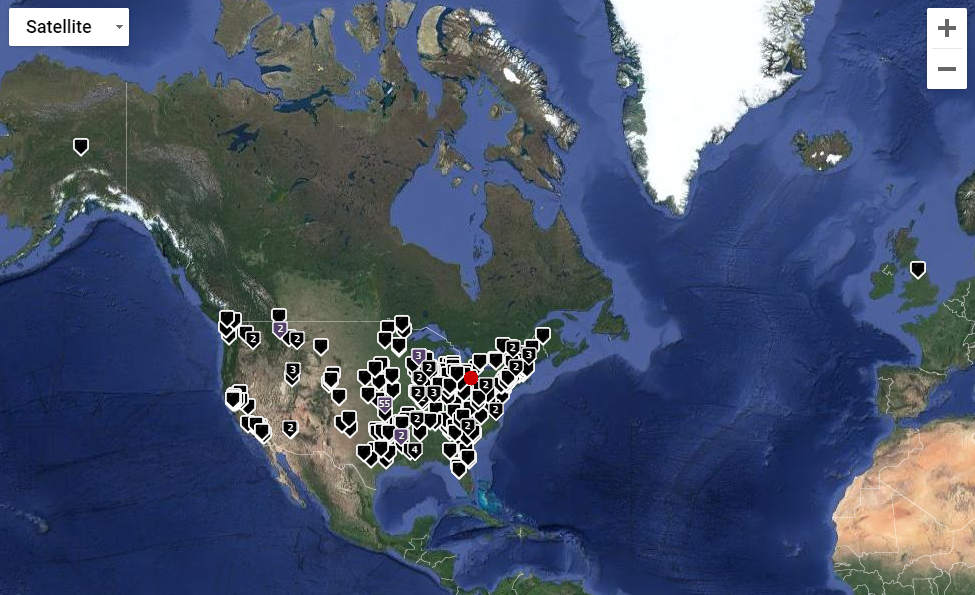
These are the expired and withdrawn listings in the last 3 years that were accidentally placed outside of the state of PA (our MLS coverage area). 529 listings placed in error. This may not be the only reason they didn’t sell, but anyone who did a g…

These are the expired and withdrawn listings in the last 3 years that were accidentally placed outside of the state of PA (our MLS coverage area). 529 listings placed in error. This may not be the only reason they didn’t sell, but anyone who did a geographical search for the actual areas these homes are in would have never known that these houses came on the market. If you’re wondering why 55 are all located in the same place in Kansas, there is a fun story about hate mail about that: https://splinternews.com/how-an-internet-mapping-glitch-turned-a-random-kansas-f-1793856052

There are currently 23 active listings outside of the state of PA. I’m sure the sellers would be thrilled. Though, that property in Washington County, just outside of Manchester England does has a certain appeal…

This is another instance - however, while the agent placed the property geographically correctly, they have listed the home in the wrong market area, instead of Washington Twp, this is placed in Murrysville. Individuals looking for properties in the…

This is another instance - however, while the agent placed the property geographically correctly, they have listed the home in the wrong market area, instead of Washington Twp, this is placed in Murrysville. Individuals looking for properties in the Kiski Area School District may exclude this property by accident - and likewise - those looking for properties in the Franklin Regional School District which services 100% of Murrysville will also skip this property. The marketability difference of these school districts is the subject of another blog post.

Double check that bedroom/bathroom count.

When someone wants a 3 bedroom home and goes and sees that your listing actually only has 2 bedrooms, and a hole in the wall in the basement, you’ve hurt yourself double - 1. You’ve come off as unprofessional, 2. Your two-bedroom buyers may never see that home in their search. There is a difference between “fluffing” (presenting all of the benefits and possibilities of a property) and “misrepresenting and misleading.

This property has a bedroom on the first floor, with the only (tiny) stairway to the second floor, which is a small cape cod style room that could be used as a captive bedroom. However, this listing says 3, with the possibility of up to 5… Dividing …

This property has a bedroom on the first floor, with the only (tiny) stairway to the second floor, which is a small cape cod style room that could be used as a captive bedroom. However, this listing says 3, with the possibility of up to 5… Dividing the upstairs room into two bedrooms would result in 2 rooms, a captive bedroom and a captive, captive bedroom. The other space upstairs that is mentioned is a TINY unfinished attic space with bare timbers. Finishing this would result in a closet sized space, which if we followed the listings advice would be a captive, captive, captive bedroom.

Finally, the possible lower level bedroom that is claimed, is unfinished, damp basement space, with solid glass block windows… the perfect place to keep someone… captive.

Digital Staging

The West Penn Multi List has recently approved digital staging of properties, with the need to disclose that this has been done. They have expressed that no changes to the structure can be made in the pictures, only the addition of furniture and similar items… but what if these things are added strategically to hide major defects? It is the opinion of Town and Country that if digitally staged pictures are allowed, that the unaltered photos must also be included. To do otherwise would be an invitation to unethical behavior and a dereliction of the responsibilities of their board.

Market Data Analysis: Weird Influences

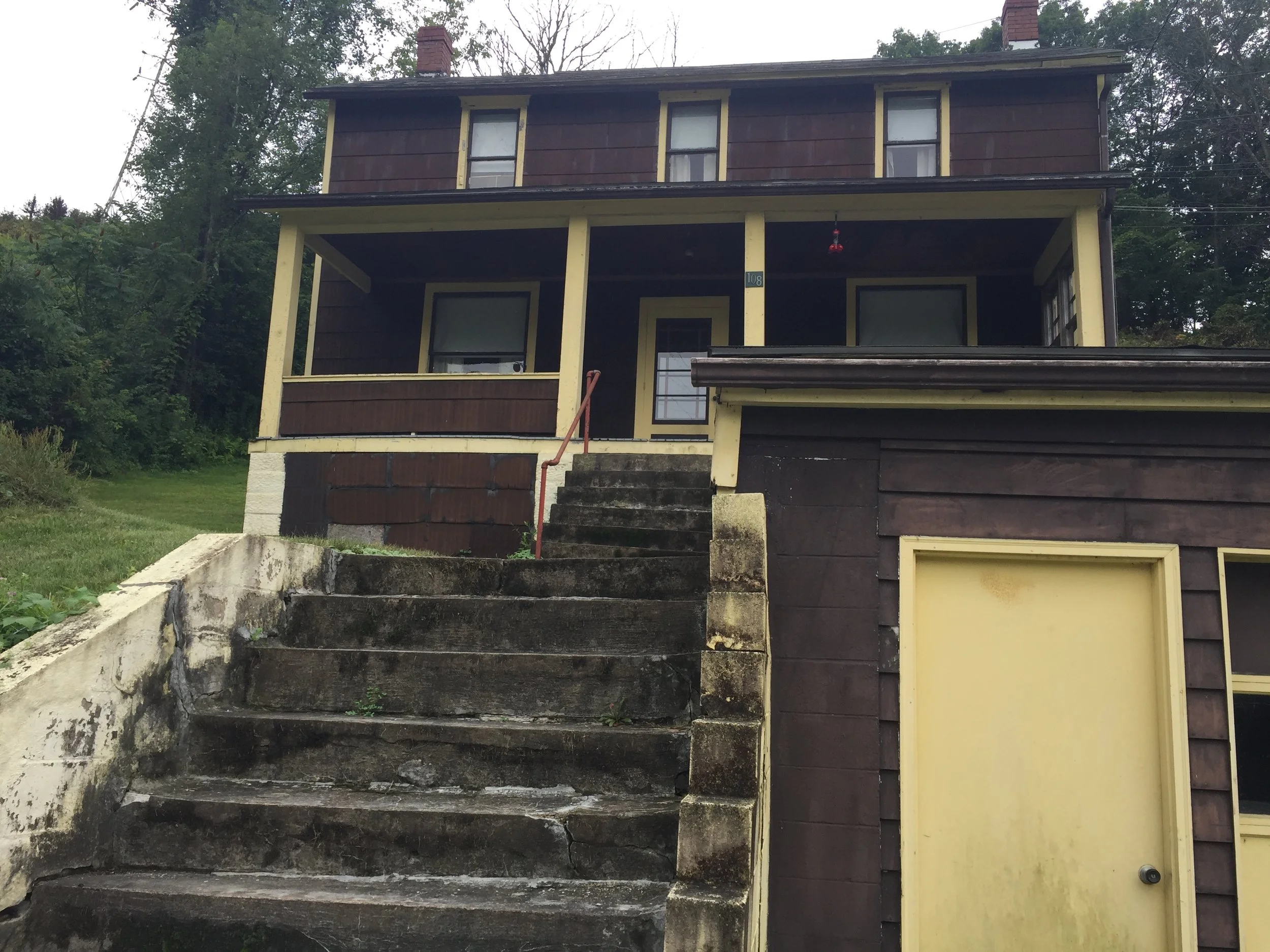
This home is 20 minutes from our office. No problems… right? One of the most difficult things to determine the impact on marketability of is odd influences. The home above looks like a typical home in much of the greater Pittsburgh area - an older s…

This home is 20 minutes from our office. No problems… right? One of the most difficult things to determine the impact on marketability of is odd influences. The home above looks like a typical home in much of the greater Pittsburgh area - an older structure, with need of some repairs and a sloped yard. That’s relatively easy to find comparables for.

Ok, now we have an issue. Those are high tension power lines very close to the right side of the home. We’re going to need to determine the influence on value of that, but that’s not the only home in the area with that influence… this will be fine. …

Ok, now we have an issue. Those are high tension power lines very close to the right side of the home. We’re going to need to determine the influence on value of that, but that’s not the only home in the area with that influence… this will be fine. We can take homes that are built near power lines and similar homes that are not and compare the market reaction to determine the impact (paired sales analysis).

Wait…. they built the house between high tension powerlines, not next to. Now we have extra questions that we have to answer, 1) Can this structure legally be rebuilt if destroyed? 2) Do you get super powers if you live there long enough? 3) We woul…

Wait…. they built the house between high tension powerlines, not next to. Now we have extra questions that we have to answer, 1) Can this structure legally be rebuilt if destroyed? 2) Do you get super powers if you live there long enough? 3) We would need to call real estate professionals for their opinion of what impact this could have (ie. What percent of the buyer pool would never consider this home? Of those remaining, what kind of discount would they expect?) We’re also very likely looking at a cash buyer only, as no lender would want to write a note on this.

It’s also built next to an overpass? Ok… again we can extract that from other sales, however, now we have multiple external influences that are interacting with each other. Do they compound, and create an negative influence higher than their sum… or…

It’s also built next to an overpass? Ok… again we can extract that from other sales, however, now we have multiple external influences that are interacting with each other. Do they compound, and create an negative influence higher than their sum… or is there a limit at which the negative appeal levels out.

OK… Again, not the only house in the area across from a storage facility, but all at once. I think we have a one of a kind. NOTE: Lenders don’t like “one of a kind.”

OK… Again, not the only house in the area across from a storage facility, but all at once. I think we have a one of a kind. NOTE: Lenders don’t like “one of a kind.”

The view across the street… a substation and another overpass (easy to miss through all the transmission lines).When a home has an odd influence on value, there are ways to extract the impact on value - paired sales and depreciated cost approach bei…

The view across the street… a substation and another overpass (easy to miss through all the transmission lines).

When a home has an odd influence on value, there are ways to extract the impact on value - paired sales and depreciated cost approach being most common. However, when these elements begin to “interact” or stack up in a single property or when data is sparse an appraiser may need to rely on the “survey method” and discuss the influence with market participants (brokers, agents, appraisers) to get expert opinions to base their judgement on. Town and Country has a list of brokers and agents with decades of experience that we call on a regular basis for assistance… because sometimes its weird out there.

National vs Local Trends: "Reversion to the Mean"

Above: 1970-2019 National median home price % increase VS. home construction % increase

Above: 1970-2019 National median home price % increase VS. home construction % increase

There is lots of talk of national home prices increasing since 2008 and having stalled in 2018-2019 and what the possible causes could be, but what does that have to do with our local market. For years the national trend has been increasing at around 3% per year, however, very few areas in western Pennsylvania have seen this kind of return. The bad news is that western PA tends to lag the national trend. The good news is that this means that housing market crashes are far less severe in western PA due to a principle called “mean reversion.”


Perhaps the greatest lesson we can take away from national home prices is that when home prices suddenly appreciate away from their normal growth curve (see the black line above) they tend to then crash back through that curve, or “revert to the mean.” (for a very in depth look at this, and the many factors that are at work in real estate). Further, we can take a look at the relationship of building cost to the median home price - factors that certainly should affect one another. As seen above around 1990 and 2006 there were two hard reversions towards not only the mean, but also towards the building cost curve. Lets take a closer look at the time frame from 1990 forward.

As seen here, after the flattening of the curve in 1990 there was a 10 year period where the two moved in concert. However, in 2000 the median home price begins to accelerate rapidly, ending in a reversion below its mean in 2006-2009. For the next 2…

As seen here, after the flattening of the curve in 1990 there was a 10 year period where the two moved in concert. However, in 2000 the median home price begins to accelerate rapidly, ending in a reversion below its mean in 2006-2009. For the next 2 years the two again move in concert, until approximately 2012 where median home prices again break to the upside, now seeming to make a top in 2018-2019.

What will the next 2 years look like in the national market? (See the green and red lines above).

  1. IF the mean line of the last 10 years is in fact the new normal, there could be a flattening of growth similar to that of 1990, with little appreciation, and perhaps some regional loses in areas that experienced the greatest growth.

  2. IF the mean line of the last 10 years is not the new normal, there could be a hard reversion closer to that of builder growth levels. This could indicate a decline more on the order of 2008.

What does that mean for western PA?

Sadly data becomes more limited and unreliable further back in time in the West Penn Multi List which covers much of western PA.

Sadly data becomes more limited and unreliable further back in time in the West Penn Multi List which covers much of western PA.

A few take aways from this data

  1. Median home prices per quarter are very seasonal.

  2. The housing crisis of 2006-2010” nationally was far shorter in this region. While 10-12 months nationally in length, that number is nearly halved to 6 in western PA.

  3. The housing crisis was not nearly as deep for our region.

  4. Median home price increases are out pacing building costs.

If a reversion to the mean occurs (is occurring nationally), western PA will like experience some pull back in home prices, however, not nearly as deep as the national trend. If national home prices only flatten, this will likely have little effect on the region as a whole, with the exception of areas that have experienced high growth.

Here is someone in 2006 seeing the “reversion to the mean” coming: https://seekingalpha.com/article/18667-housing-what-does-return-to-mean-really-mean